03.11.2026
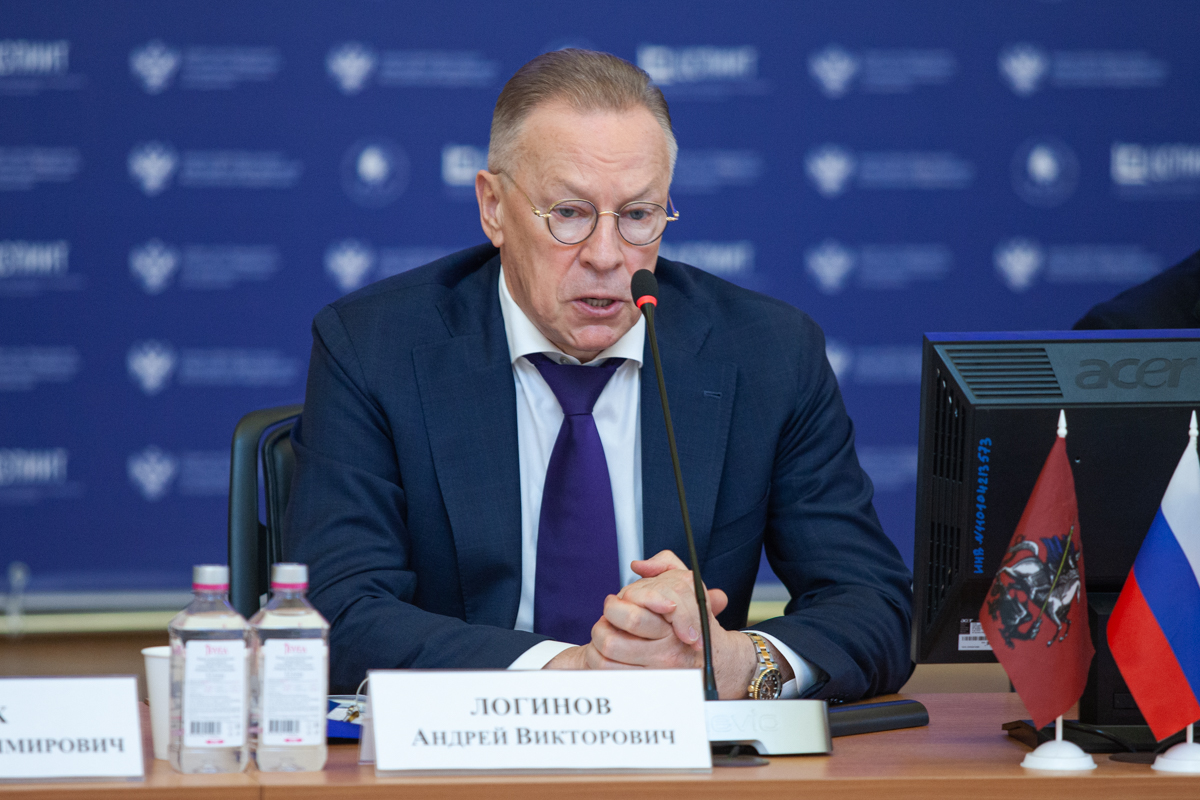
On November 3, RSUH Rector Andrei Loginov spoke at the round table “Historical Foundations of the Unity of the Peoples of Russia” as part of the International Week “Peoples of Russia,” presenting initiatives for developing historical education and the study of interethnic relations.
«The historical foundations of the unity of the peoples of Russia are not a fact in the past tense but a continuously ongoing action. The past supplies the material, but turning it into shared knowledge that can be passed on is a task that requires scholarly work and educational practice by every generation. And that is precisely the mission of humanities universities: not to supply politics with decorative historical footnotes, but to rigorously produce knowledge capable of serving as a verifiable cognitive basis for the civic unity of the country», — stressed RSUH Rector Andrei Loginov, drawing attention to the special responsibility of the academic community for forming reliable ideas about the historical past and passing them on to new generations.
Turning to the centuries-long experience of interaction among the peoples of Russia, the Rector noted that understanding the origins of national unity cannot be reduced to reproducing well-known events and symbols, since behind them lie complex processes of reconciling interests, overcoming contradictions and forming institutions that enabled the joint development of different cultural and religious communities. It is attention to the mechanisms of social interaction, rather than exclusively to its results, that should, in the Rector’s view, determine the content of historical education.
Andrei Loginov proposed basing the teaching of the history of interethnic relations on three principles: priority of studying the process over the ready-made conclusion, of analyzing institutions over declarations, and of recognizing differences over the pursuit of homogeneity.
However, a full understanding of the past requires not only improving educational methods but also expanding the source base of research. Andrei Loginov drew attention to the insufficient study of regional archival collections, the lack of uniform standards for collecting oral ethnographic materials, and the need to develop comparative methods of analysis. Another problem concerns the gap between academic scholarship and educational practice: the results of fundamental research by no means always find their way into curricula, and the path from a serious scholarly monograph to a school lesson often turns out to be too long.
From the problems, Andrei Viktorovich moved on to specific solutions, presenting three initiatives aimed at developing scientific and educational infrastructure. The first provides for a federal ten-year program of digitization and scholarly annotation of local historical sources, thanks to which archival materials on the history of interethnic relations will become more accessible to researchers and teachers.
The second proposal concerns the training of history teachers: Andrei Loginov spoke in favor of including in educational programs a mandatory module on the specifics of teaching history in multiethnic regions. Its content should involve working with sensitive historical issues and differing interpretations of events, developing in future teachers the skills of balanced analysis of complex social processes.
Finally, the third initiative envisages creating, at universities, short-term history programs for civil servants and media representatives.
Summing up, Andrei Loginov stressed that further study of the historical foundations of the unity of the peoples of Russia should become a subject of ongoing cooperation among universities, the research community and government bodies.


