28.10.2026
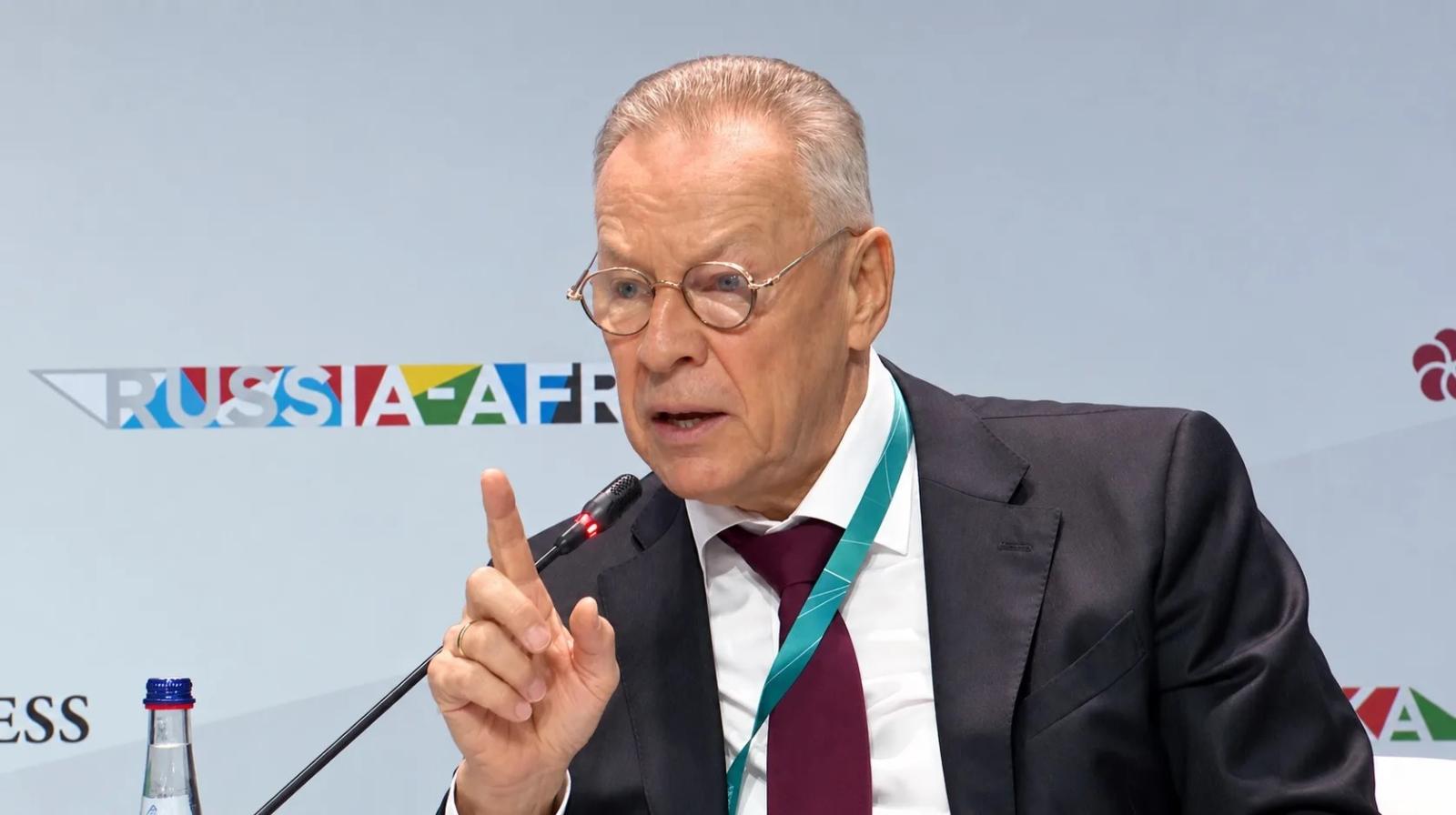
On October 28, RSUH Rector Andrei Loginov spoke at the panel discussion “Vectors of Development of Educational Partnership between Russia and Africa” as part of the Economic and Humanitarian Forum of the Third Russia–Africa Summit. He presented the university’s initiatives aimed at developing scientific and educational cooperation and preserving the historical and cultural heritage of African peoples.
“When considering educational cooperation with African countries, we must understand that we are talking about the future. Today, Africa is the youngest continent, and in the not-too-distant future it will become one of the world’s leaders in population size. That is why it is so important to foster interaction between young people and ensure that they receive quality education. This is precisely what our cooperation with African countries aims to achieve,” emphasized Konstantin Mogilevsky, Deputy Minister of Science and Higher Education of the Russian Federation.
According to the Deputy Minister, interest in Russian higher education continues to grow: more than 37,000 African students are currently studying at Russian universities, a significant proportion of whom are enrolled on a tuition-paying basis. Alongside expanding government quotas and grant support, Russia is developing university infrastructure directly on the continent, strengthening ties with industrial enterprises, and creating conditions for training specialists in demand within African economies. The return of graduates to their home countries is of particular importance, as the knowledge and professional experience they have acquired can contribute to the development of various sectors.
However, educational partnership is not limited to professional training and technology transfer. RSUH Rector Andrei Loginov drew attention to its humanitarian dimension, emphasizing that successful cooperation between universities is impossible without a deep understanding of the cultural characteristics, historical experiences, and national values of the peoples whose representatives come to study in Russia.
According to Rector Loginov, the revival of Russia’s school of African studies and the expansion of fundamental research into the continent’s history, culture, and civilizational heritage should play an important role in developing this cooperation.
New educational programs, in whose development RSUH is ready to participate, could serve as a practical continuation of this work. These initiatives are particularly relevant in light of the problem of African countries’ access to their own historical and cultural heritage, including archival documents and museum collections located outside the continent.
In addition, Andrei Loginov presented the research project “The Role of Africa in the Development of World Civilization: Past and Present,” the findings of which are intended to form the basis of an academic course for Russian and African students.
Jean-Laurent Syssa-Magalé, Minister of Higher Education, Scientific Research and Technological Innovation of the Central African Republic, also outlined the prospects for practical cooperation with Russian universities, paying particular attention to the needs of his country’s national education system.
The Minister recalled the long history of educational ties between Russia and the Central African Republic, noting the contribution of Russian education to training national specialists.
Alongside humanitarian initiatives, participants discussed the activities of the Russian-African Network University and the International Consortium of Technical Universities “Africa’s Subsoil,” as well as prospects for academic mobility, joint educational programs, and the participation of industrial enterprises in specialist training.


